Tuesday, August 5, 2014

Handling A South Carolina Automobile Insurance Repair Claim

Nobody wants to crash. It is never worth it. If you're reading this post, you or a friend are probably in a situation. If so, then the information about how to make an automobile repair claim will help.  

In South Carolina, automobile liability insurance companies must act immediately to fully settle property damages when negligence is obvious.
Whenever an insurer has the appropriate motor vehicle coverage . . . the payment of the full property damages . . . is immediately due and owing and must be paid promptly.
S.C. Code Ann. S  38-77-330. 

If the claim is against your own policy (such as for collision, comprehensive, or uninsured motorist insurance), then your policy language effects the amount of compensation due. This post assumes your claim is against the insurance company for the at-fault driver.

The most common type of South Carolina insurance claim is a minor collision claim involving a repairable vehicle. The idea is that your car's collision damage will be so completely repaired that it will end up in its pre-collision condition. This means that the quality of any mechanical repairs must be top notch. 

1. Where

The choice of where to have a vehicle repaired is yours. You may direct that the insurance company take your vehicle to your facility of choice. However, there are advantages to be gained by letting the insurance company pick the repair facility. For example, when there are problems with the repair work, it is easier to argue for additional compensation when an insurance company picks the facility. If you pick the facility, the insurance company will often try to blame your mechanic for post-repair problems or delays (loss of use issue). 

2. Parts

Unlike a lot of States, South Carolina does not have a specific statute mandating use of original equipment parts (OEM). However, the common law here does require them. When a repair facility does not use OEM parts, document it for your claim. It may entitle you to additional compensation. 

On the other hand, because the vehicle was not brand new when you crashed, the liability insurance company is not required replace broken parts with brand new parts. 


You somewhat control the repair of your vehicle. Therefore, you might choose to use after-market parts to save money.  Just make sure that it is you gaining the savings and not the insurance company or the repair facility.

3. Thoroughness

When you evaluate a minor repair job, consider that all damage must be fixed, including smudging of paint or any scratching of the body. The body work aspect of the repair can be costly and you want to make sure this part of your compensation is paid.

Do not let an insurance company argue you out of repairing a paint smudge on a plastic bumper as too nit-picky. You should still seek compensation for the repair.

4. Inadequate Repairs

If there is a problem that is not being fixed, keep good notes about what is wrong.  Your obligation is to be a good historian when reporting symptoms to a repair facility.  A facility cannot be expected to fix a problem they cannot understand. Clear written communication is key.

The repair facility must have an opportunity to cure defects in their work. Bring the vehicle back to the repair facility until either they (1) fix the symptom; or (2) tell you that it cannot be further repaired.  

When a facility tells you it is unable to repair a symptom, or that the condition is irreparable, document the issue with a written or recorded statement from the technician or facility employee.  At the very least, make your own notes. Also, request and keep copies of all invoices and work orders at the facility. These are forensic documents that should be preserved in case needed later to support your claim.

5. Loss of Use

During the period your vehicle is under repair, you are eligible for the loss of use of your vehicle. The monetary amount of this loss is typically pay about $10 - $20 (the cost of a rental vehicle). Sometimes an insurance company provides a rental vehicle instead of paying these losses with monetary compensation. Keep good records of the periods you are without a vehicle so you can make a claim for compensation.

6. Other Property Damage

There are a lot of other possible property damages caused by a collision. Next week I will post about how you can get even more money (compensation) out of a property damages claim.

7. Who Gets the Check

If you have a loan on the car, sometimes the insurance company will add the bank as a payee on the check. This is intended to insure that the bank's collateral (your car) is repaired. The bank may want to participate in picking the facility where the repair work will be done.  

If the car is taken to the insurance company facility for repairs, the check is sometimes made payable to both the facility and you. In so, inspect your car to verify the repairs work was completed before you endorse the check.  

If you choose the facility, the check may be issued to you. In this situation, take the car to your mechanic and negotiate a price.

Friday, August 1, 2014

How to Make a South Carolina Automobile Property Damages Claim Without an Attorney

You have three property damage insurance claims you can make when your car is in an accident with a careless South Carolina driver : 
  • A liability insurance claim (his policy);
  • A collision insurance claim (your policy);  and
  • A uninsured motorist claim (your policy). 
Let's go in order.  

Liability Insurance Claim

If the other driver is legal, he will have liability insurance that covers property damages caused by his careless driving. 

Making a claim is simple.  Write to or call the other driver's insurance company. We recommend writing because it creates a record. But calling will work fine if the liability insurance company is honest. Keep notes about all communications with insurance companies. 

The liability insurance company will open a claim, assign a claim number, and refer the claim to a property damages adjuster. Write this information down.

The Liability Adjuster's Preliminary Investigation

The first two issues the liability insurance adjuster will address is (1) verification that the other driver's carelessness caused the collision, and (2) that there was coverage on the car at the time of the collision. 

  • Liability Investigation

A copy of the FR-10 form should be sent to the liability adjuster as soon as the claim file is opened and/or a property damages adjuster is assigned to your claim. The adjuster's liability determination can be made simply referring to the police report, which will indicate the police officer's opinion on fault. The FR-10 is a forensic document and it puts pressure on the adjuster to quickly resolve the liability issue and move on to the property damages assessment. 

Sometimes the property damages adjuster will want to talk to the driver of the other car to verify the police officer's opinion.  Sometimes this can cause a delay.  The longer the adjuster's liability investigation drags on unresolved, the longer it will take to pay you for your loss.  With some insurance adjusters, the preliminary investigation can take days or even weeks.  When the delay associated with the adjuster's investigation becomes inconvenient, just file a collision insurance claim (if you have such coverage on your policy).  

  • Coverage Investigation

During the preliminary investigation stage, the liability insurance adjuster will also make a coverage evaluation. This coverage evaluation should not take long. However, there are exceptions such as when there is an issue of "permissive use" or fraud.

If there is a substantial delay caused by a coverage investigation, file an "uninsured" claim with your own insurance company.

Damages Assessment

Eventually, the liability adjuster will attempt to determine the amount of your property damage. The damages assessment process is the same no matter what type of insurance claim you are making (liability, collision, or uninsured).

  • Minor Collision

In a minor collision, the adjuster will hire someone to view your vehicle and assess the cost of repairs. 

You have two options: (1) You can accept payment for the estimated repair expense and hire your own mechanic, or (2) you can take the car to one of the insurance company repair facilities.   

Which option is best? 

It depends.


I favor the insurance company repair facility because that will reduce argument about who is responsible for faulty repair work. However, if you know a good mechanic and the repair offer is more than what your mechanic is charging, it makes sense to choose someone you know. 

If you take the vehicle to the insurance company repair facility, keep bringing it back over and over until the repair work is completed or they just refuse to work on it anymore. You should also have your car checked by your mechanic to verify that factory parts were used and that all the repairs were adequately made. Take pictures, make recordings, and obtain statements if there are repair issues. 

  • Major Collision

In a bad collision, the issue of total loss has to be considered. 
Insurance companies generally realize that when the cost of repairing a car is more than fifty percent of its total value, it is a total loss. This is because major repair work will never be able to fully return the vehicle to its pre-collision state, and the vehicle will have a significant loss in value.  

  • Total Loss

If the insurance company decides to total your vehicle, then you have two options: 
  1. You can keep the vehicle and receive a payment for its pre-collision, fair market value minus the post-collision "salvage value." (The salvage value of a new vehicle can be quite high.) or
  2. You can deliver title to the insurance company and receive a full payment for the fair market value of the vehicle before the collision.

Option 2 is chosen frequently because people don't want a smashed up wreck towed to their home.

If still owe money on the car, a bank will hold the title. The liability adjuster will negotiate the payments with both the bank and you to obtain the title free and clear.  Hopefully, the car is worth more than the loan balance, and you will receive some money after your debt with the bank is paid.

  • Repair

Repairing a vehicle that was in a major collision to its original condition is impossible. Document and create evidence to prove the inevitable unresolved problems. These problems decrease the value of your vehicle and you should receive compensation for the loss. Here are some examples:

  1. Go under the car and take pictures of a bent frame;
  2. Use your phone to record squeaks and whistles as you drive;
  3. Obtain statements from your mechanic that replacement parts were not factory parts (they can be used factory parts in South Carolina), or that repair work was incomplete; 
  4. Record friends who can feel and see lumps on the body or differences in paint; or
  5. Take pictures to show visible unresolved problems.

Use the evidence and push for money to make up for the car's decrease in value.

Collision Insurance

Collision insurance is no fault insurance. It pays no matter who caused the collision. Your insurance company will quickly pay you for your loss because it does not need to do a preliminary coverage or liability investigation.  Sometimes it is preferable to make a collision claim and quickly settle with your company rather than waiting weeks on the liability adjuster's investigation.

To file a collision claim, just write or call your own insurance company and tell it you wish to open a claim. Like with a liability claim, the company will open a claim file and assign an adjuster.  

Once the collision insurance claim is paid (or the repair work is authorized), your insurance company will pursue reimbursement with the liability insurance company. 

What you will need to worry about when making a collision claim is your deductible. You need to continue to press the liability insurance company for reimbursement of your deductible. Sometimes your own insurance company will help with this. 

Uninsured Motorist Claim

When the car that caused the collision is uninsured, or when a collision was caused by a hit and run driver, your only option is to file an uninsured motorist claim. You will have to pay the deductible amount.  However, an uninsured deductible will be less than a collision deductible. Make sure your own insurance company processes the claim in the way that is best for you financially.  

The process to make an uninsured motorist claim is the same as any other. Just write or call your company and make the claim. Keep a record of the number and adjuster's name who is assigned to the claim.

You should make an uninsured claim when the liability insurance company is taking too long to figure out if there was coverage. Let the two insurance companies sort it out. Don't forget to make the liability insurance company reimburse you for your deductible.

Thursday, July 24, 2014

Forensic Investigation of Motor Vehicle Collision Sites

Often there is a disagreement about what happened to cause a motor vehicle collision. Fortunately, there is usually forensic evidence at the scene that can corroborate your story. However, one must move quickly to gather the evidence or it will be lost forever.

In a bad collision such as one with death or serious injury, it is wise to hire a professional to collect site data as soon as possible. However, even in a bad wreck, when the amount of insurance coverage is limited it may not be cost-effective to retain an expensive expert.

Police Investigation

In South Carolina, the police use a standardized report form (TR-310) to record data at a crash site. Quite a bit of useful information about a collision is recorded on this form. This information includes facts like the location and time, specifics about the vehicles, drivers and witnesses, descriptions of vehicle movement and actions, weather, speed, and causation statements as well as a lot of other data. 

Nevertheless, relying solely upon the police investigation report for your forensics is sometimes unwise. The report is usually incomplete or the investigating officer may rely on information provided by the other driver, much of which may be inaccurate. Therefore, smart people often gather their own forensic data from the collision scene.

Safety First


If you intend to visit a collision site to collect forensic evidence, take safety precautions. 
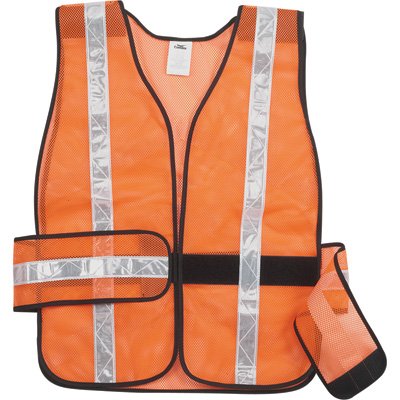
  • Definitely wear a safety vest to make yourself visible to other drivers. 
  • Keep your head on a swivel and do not trust people to keep a proper lookout.


  • Try to visit the scene during a bright day and when traffic is light.
  • Park your vehicle in a place where it is not a hazard to road traffic.

Measurements and Collision Site Evidence.


Skid Marks


The length of a careless driver's skid (assuming he braked) may be used by an accident reconstruction expert to his calculate speed. This bit of forensic information can help prove when another driver is not telling the truth about his speed. Alternatively, photographs revealing an absence of skid marks help prove the other driver never braked at all.

Road traffic and weather will erase skid marks fast so it is important to act soon if you want this data. When you measure a skid mark, look carefully to find the faintest beginning of the mark. That is the point where you begin to take your measurement of length.

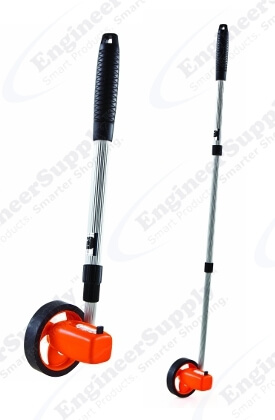
I use bright green spray paint to mark the beginning and end of a skid mark, and also to mark any other relevant tire marks (see below). The best simple tool to measure length is a rolling measuring wheel. Use a tape measure to measure width of any skid marks. If possible, bring a witness with you to help you record the data and stay organized.  Keep detailed notes with pad and paper. 

Scrub marks 


Carefully examine the skid marks left on the road surface by tires. There are useful clues to be gathered along the tracks of the skid. Investigators call a sudden sideways tire-mark a scrub mark. This type of detail is important to a forensic investigator because it may indicate a point of impact.

One possible cause of a change of a sudden change in direction is a collision that redirects the vehicle's direction of travel. Scrub marks are important because they help confirm the location of where a collision impact took place.  Such data as a scrub mark or gouge (see below) in the road surface is important for presentation of evidence in a trial. Even without an expert, an attorney can argue to a jury about what a scrub mark or road gouge mark represents. It is common sense and reliable information that goes into the mix during jury deliberation.


Post Collision Skid Marks


Try to find evidence used to determine a vehicle's post collision direction of travel. Look for sideways skid marks and yaw marks indicating a post-collision spinning vehicle. 

Road Surface


The quality of the road surface is a factor experts consider when figuring out speed. Accident reconstruction experts talk about a variable number called the coefficient of friction. An accurate coefficient of friction is necessary to estimate speed. Without this variable corroborated and explained, some judges may sustain a "speculation" or "no foundation" objection and prevent your expert from stating an opinion on the other driver's speed. Whether you decide to hire an expert or not, you should still try to establish evidence about the road surface. You do not need to be an engineer to make accurate observations. Here are some of the items to think about recording in your notes and pictures about the scene.

  • The wetness or dryness of the road surface at the time of the collision;
  • The grade of the road (level, downhill, uphill);
  • The type of road surface (asphalt, concrete, gravel);
  • The quality or age of the road surface (older road beds are degraded and looser than newer paved roads); or
  • The amount of vehicle fluids accumulated.
Make notes about the road surface in the area of the collision. Document your observations of the road surface with notes, tagged photographs, or short movies.

The coefficient of friction data is not the only thing on the road surface you need to look at. Look for scratches and gouges too. The forces at work in a motor vehicle collision can be so powerful that the road surface itself will be marred. For example, two cars in a head on collision will tend to gouge out a chunk of the road surface at a point of impact. The gouge marks the exact location of the point of maximum impact between vehicles.

Alternatively, if the vehicle rolls or overturns, the metal as the car slides along the surface may create scratches and other marks.  If you see such marks at a collision site, spray paint a circle around it and record the exact location and distance.

Vehicle Position


Record the exact location where the vehicles in a collision came to rest. Use your spray paint to draw a corner mark. Look for fluid spills and other evidence on the road surface to confirm a resting location of a vehicle with a damaged engine.

Also look for any debris fields, or other evidence left at the site of a collision. For example, in an emergency, EMS personnel may remove shoes or cut away clothing and toss them off. Record the location and nature of any collision related debris.

Damage to Physical Objects


Observe and record evidence to physical objects along the area of a collision. Look for dented guard rails, signs, and trees.

Record The Forensic Evidence


Use your camera to take a good photographs of the evidence. Try to include background features in the pictures--such as storm drains or signs--to help with reconstruction of the accident. Take closeup pictures, and pictures from a distance. Take pictures from different angles, going and coming, and sideways. Make movies. For example, start the camera and walk along the skid mark shooting the mark as you walk. Also, take pictures of any relevant traffic control devices such as speed limit, stop, or yield signs, or traffic signal lights.

Make a Diagram


Make a diagram of the collision site. My favorite trick for creating a diagram of a collision site is to use Google Earth and obtain a satellite image of the site. Lighten the image and print it out. Take several copies of the satellite image with you to the scene to make your drawing.  If possible, find landmarks on the satellite image that you can use as background for photographs of road surface forensic evidence. Shoot pictures from different angles to facilitate triangulation and understanding. Such images will help orient your drawing, improve its accuracy, and deflect objections that the pictures tend to confuse.  

At trial in South Carolina, the diagram you draw does not have to be perfect. The foundation for admitting it into evidence is that your diagram is sufficiently accurate to illustrate the testimony about how a collision happened.  Still, I would strive to make it as accurate as possible.  

Make separate diagrams for different sets of data. For example, on one, draw important points of interest such as the beginning of a skid mark, a gouge, or a scrub mark, and the measurements associated with each aspect. On another show the vehicle resting positions and any fluid spots on the roadway. On an another, show traffic control devices, etc. 

Keep Records and Organize Your Work


Take good notes about your measurements as you work.  Once you finish gathering the information, take some time to sit down and organize the data. Organizing the data before leaving creates an opportunity to spot holes in the data, and to correct notes that are hard to read or understand while everything is fresh in your mind. If necessary, supplement the forensic investigation without having to return to the scene later on.

Save all of your work.  Even your scribbles.

Friday, July 18, 2014

What To Do If You Are In A Wreck

Stop your vehicle. Drive the vehicle off the road to the shoulder so it is not endangering other drivers. 

Hopefully, nobody is hurt. Call 911 and report the collision. 

Try to make sure other drivers approaching the collision have time to see it and take evasive action. Activate hazard lights in your car.  If you have cones and flares, this is the time to use them to warn others of the road obstruction. Get yourself and any uninjured people to a safe spot out of the road as soon as possible. 

Identify yourself to the other driver. Exchange driver's licenses, car registrations, and insurance verification forms. Take pictures of the other person's documents and his vehicle license plate, or write down the information.

Wait for the police. Once the police arrive, they will seek to interview both drivers. 

When it's your turn to talk to the officer, she will want to see the licenses, registrations, and insurance verification forms. Have them with you and ready.  Be professional. 

The police officer will create a police report for the collision called the FR-10. A copy of this document is given to both drivers.  The FR-10 may indicate who caused the collision (in the officer's judgment) and have a lot of important data on it. Review the FR-10 form and notify the police officer if you see any mistakes. If you are a passenger, take a picture of this document. It has important information on it.

Report the collision to your insurance company as soon as possible. This is true whether the other person causes the accident or you do. 

If you are not in your own vehicle, you need to tell the owner of the car about the accident so he can report it to his insurance company. Also, the owner is required to verify his automobile insurance to DMV within 15 days of the collision. Normally, the owner's insurance company will do this for him.

See this post about how to preserve evidence related to the collision: Your Mom Wrecked! Use Your Smart Phone To Create Powerful Forensic Evidence for Her South Carolina Case

Friday, July 11, 2014

Top Ten U.S. Presidents


Here is my list of the top ten best Presidents in the history of the United States:

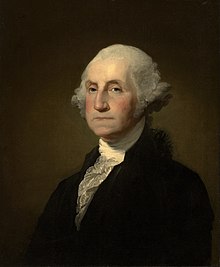
  1. George Washington
  2. Thomas Jefferson
  3. Martin Van Buren
  4. Calvin Coolidge 
  5. William Howard Taft
  6. Warren G. Harding
  7. Andrew Jackson
  8. Dwight D. Eisenhower
  9. John F. Kennedy
  10. Grover Cleveland


              My main factors in these rankings are the President's willingness to adhere to the U.S. Constitution, willingness limit federal power, and practical achievement of actually resisting increase in federal authority. In other words, I prefer Presidents that increase freedom. Some of these Presidents were actually successful in decreasing the size and scope of the U.S. Government power.

              Monday, July 7, 2014

              Your Mom Wrecked! Use Your Smart Phone To Create Powerful Forensic Evidence for Her South Carolina Case

              Your Mom wrecked! 

              The collision site is now a crime scene. Even if you're not a policeman, attorney, private investigator, or paralegal, you can still help your Mom's wreck investigation with one simple, everyday tool to gather forensic evidence and support her claim--the smart phone. This post gives you some examples of the powerful way you can use a smart phone to help your Mom.

              The dictionary defines forensic  as "the application of scientific knowledge to legal problems." In the courtroom, forensic evidence is powerful. Forensic evidence includes pictures, videos, and careful measurements of time and space. Forensic evidence corroborates testimony. It is vitally important because it establishes a factual record that is not easily attacked by insurance defense lawyers. 

              What kind of forensic evidence does your Mom need to prove her wreck case? Obviously, she needs proof of the other driver's carelessness. But she also needs proof of her harms and losses. Gathering forensic evidence for harms and losses is often overlooked by lay people. However, the damages element is the most important part of your Mom's claim. Forensic evidence of your Mom's harms and losses documented with a smart phone enhance the probability your Mom will make a full monetary recovery. 

              The ubiquitous smart phone is your best tool for making a good forensic record. Send the image, audio and video files you make with it to yourself (or your attorney) by email, save them to your computer's hard drive, and upload them to an Internet file storage service (e.g., Dropbox) as backup. 

              Here are some examples of how to use a smart phone to create forensic proof.

              • Take pictures of the vehicle damage.

              The insurance company will take pictures of the vehicles. However, the insurance company takes photographs designed to minimize the collision impact. (Insurance defense lawyers like to argue the collision impact did not cause injury.) Therefore, your Mom needs pictures of the car to prove the vehicle damage. 

              Think like a CSI. If a paint smudge on your car helps proves someone hit you, take the picture of the smudge.  If the dent location supports your description of the collision, take a picture. Take pictures of the interior. Look for bent steering wheels and star patterns on the glass.  Photograph the speedometer and odometer.  

              It is worth a trip to the facility where your Mom's car is stored to gather this evidence.

              • Record Witnesses

              Make audio recordings of witness interviews. At the beginning, ask them for their names, addresses, and telephone numbers and let them know you are recording. Get them to tell what happened to cause the collision. Ask them if anyone was hurt and for a description of the injuries. It is even worth attempting to get a recording of the other driver. Keep your audio files short, sweet, and to the point. These are wonderful bits of forensic evidence at trial.

              • Make a Video of Your Mom's Route 

              Recreate the trip. This will help explain how dangerous the other driver is to other people on the roadway. As they watch, the jurors will imagine that they are sitting in your Mom's car which is about to be in a bad collision. The feeling is literally like watching a train wreck.

              Plus, the recreation video is often used to overcome excuses or misrepresentations by the careless driver. He might claim that your Mom was at fault for speeding, or that the sun was in his eyes, or that he didn't have time to see your Mom because of a curve or hill in the road. Use your smart phone and take pictures from his perspective. The pictures will show how easily a careful driver might have avoided the collision. 

              • Use the Stop Watch.

              The stop watch on your smart phone can help recreate the timing of events leading up to the collision. For example, how many seconds elapsed between the time your Mom first saw the other car, and when it pulled out in front of your Mom's path of travel. Very accurate information about timing is often an essential forensic bit used to figure out speed and undermine defenses (excuses). 

              • Take pictures of your Mom's injuries as soon as possible

              Photographs document evidence of your Mom's injury. It is true that EMS and hospital triage records include medical examination notes that record the doctor's observations of what he saw that day. But you should not rely on the hospital records or the examination notes to accurately record injury data. Hospital records often have conflicting information, omit important facts, or have errors. Take pictures of your Mom's bruises and lacerations. These pictures constitute irrefutable proof of traumatic injury and help to explain the mechanism of your Mom's injury.

              • Keep taking pictures as your Mom heals 

              You can use a series of photographs to demonstrate how long it took your Mom to overcome her injuries. This is particularly true with a very severe injury which may take months and even years to fully heal.  If there is a residual injury, like a scar, photographs help to prove a permanent injury exists. 

              • Take pictures and make movies of your Mom's rehabilitation

              If your Mom is stuck in a hospital bed, wheelchair, or uses prosthetic devices to get around, use your smart phone to make short movies of what she is going through. Take pictures of the crutches or wheelchair she uses.  Make a clip of her doing the prescribed daily physical therapy exercise. 

              Movies and pictures like these are gold for your attorney during direct examinations. They can be used to demonstrate your Mom's harms and losses in a positive way. They make her testimony interesting and give us visuals to help your Mom tell her story. They illustrate how much time and effort she expended recovering from the harm. 

              • Consider an Audio or Video Logbook of her Recovery

              Think about an audio or video logbook to contemporaneously record your Mom's feelings during her recovery. Make it part of the story about how your Mom overcame her injury. Let her address the frustration and setbacks along the road and explain how she was able to cope. Make it positive.  Be accurate in your Mom's log. If the contemporaneous recordings about her feelings are authentic, they will dramatically help prove your Mom's harm at trial.

              • Copy Documents
              You can use the smart phone to capture images of documents. Take pictures of the police incident report. Take pictures of the business cards of witnesses. Take pictures of driver's licenses and insurance documents.  Take pictures of hospital contracts. Take pictures of license plates.

              There are applications you may add to your smart phone that will convert these images of documents into Adobe pdf files that are easy to store and share. One example is an application called the Cam Scanner. 

              Conclusion

              We hope that your Mom does not really have an accident. But if she does, we want to help her with her legal claim.  Thanks for reading!

              Monday, June 9, 2014

              Book Review of Get a Job, Build a Real Career, Defy a Bewildering Economy by Charles Hugh Smith

              There are a lot of unemployed people in our economy. All of them would benefit by reading Charles Hugh Smith's book, Get a Job, Build a Real Career, Defy a Bewildering Economy.


              Theme


              Smith's book first acknowledges that our current economy is undergoing a massive shift similar in scope to the industrial revolution.  He indicts the higher education system as a cartel that has lost touch with employer demand. Smith's premise is that the need for a higher education stamp (degree) is of much less value in today's economy than the cost associated with the massive debt load it inflicts. Instead, Smith urges people to "self-accredit" at a much lower cost, and he explains how a person should go about doing so.


               Skills That Are Not Taught in University


              Professionalism.

              Smith correctly asserts that employers are looking for professionals.  A college degree does little to teach people the skills of a professional. 

              Employers are looking for professionals--people who are accountable and take ownership of their tasks. They want folks who communicate clearly and effectively and work collaboratively.  Employers seek people who learn and accept challenging new material. They want people who can creatively adapt and solve problems in changing environments.  The University curriculum does not focus on helping students develop these professional skills.

              Once upon a time, employers were willing to hire people and teach them the skills of professionalism. However, in today's economy, with an abundance of college educated unemployed people looking for a job and the cost of hiring people escalating, employers will not hire people and invest years of on the job training. Employers want to hire employees who will hit the ground running. Smith's book tells how to become a proven professional and to be that person. 

              Smith: "a professional is never unemployed; he is always self-employed."

              Self Accreditation


              Get a Job, Build a Real Career, Defy a Bewildering Economy gives details on how a person can self-accredit themselves.

              Smith first urges readers to self assess and find their true calling. Once you know it truly, develop mastery over your field. Work hard to gain deep expertise based on experience and ownership of all aspects of your work, including the reputation that arises from its results. Become a professional in your chosen field.

              As a practical matter, Smith asserts that a blog is essential for every person. The blog itself represents proof of a person's professionalism.  It is linked to social media platforms and used to continually build networks. It actively demonstrates the person's creative qualities and problem-solving skills. 

              Smith urges us to seek out projects (in our field) and use our blog to document forensically the work associated with their completion. Do not use the blog as a grandstand to hype yourself. Rather, use it like an old-school journalist (or an attorney ) to forensically prove your professionalism. Incorporate photographs, audio and video files, and write about how you overcame obstacles to complete a project.

              Use the blog as a tool to link social media accounts and to develop a network of mentors and peers. These are the people who observe and confirm your professionalism. When a prospective employer Googles your name, they will confirm you as a doer who puts professional skills and knowledge into practice. 

              By the way, action is necessary.  In Get a Job, Build a Real Career, Defy a Bewildering Economy, Smith quotes Ralph Waldo Emerson several times: "Do the thing and you shall have the power." He argues you need to seek out and find projects in your field. This might include volunteering to work on community projects, or for a non-profit organization.

              Conclusion


              Get a Job, Build a Real Career, Defy a Bewildering Economy is an Austrian economics book.  It is full of truth and common sense. It blows the shroud off our higher education system and reveals a failing institution propped up by government and unable to prepare students for entry into the rapidly shifting new economy. Smith's book tells us how to be part of a do-ocracy, thriving in it, at a much lower economic cost.